Education & Career|Skills & Learning|2026 Edition
Student Success Guide · 2026
Skills Students Need
to Thrive in 2026
Updated March 2026 · 15-minute read · For students, parents & educators
The world is changing faster than most textbooks can keep up. Here’s what actually matters — the skills students need to be ready for the careers, challenges, and opportunities that are already arriving.
📋 What You’ll Learn in This Guide
- Why These Skills Matter More Than Ever in 2026
- AI Literacy & Digital Fluency
- Critical Thinking & Problem Solving
- Communication & Collaboration
- Financial Literacy
- Emotional Intelligence & Mental Resilience
- Coding & Data Basics
- Creativity & Adaptability
- Global Awareness & Cultural Sensitivity
- Self-Management & Lifelong Learning
- How Students Can Start Building These Skills Today
Let’s be real — a lot of what students are being taught in school right now wasn’t designed for 2026. That’s not anyone’s fault. Education systems are slow to update, and the world is moving at lightning speed. AI tools are reshaping entire industries. Remote work is normal. Automation is replacing routine jobs. And employers are increasingly hiring for skills — not just degrees.
So if you’re a student (or a parent, or a teacher), the big question is: what skills students need to actually succeed in this environment?
This guide breaks it all down — clearly, practically, and without the fluff. We’ve looked at what employers are asking for, what futurists are predicting, and what successful students in 2026 are actually doing differently.
85%of 2030 jobs don’t exist yet, per the World Economic Forum
50%of workers will need reskilling by 2025, says McKinsey
92%of employers rank soft skills as essential as technical skills
Let’s get into it.
Why the Skills Students Need Are Changing So Fast
Not that long ago, getting a solid education, landing a stable job, and staying in that career for 30 years was the plan. That plan worked. But it doesn’t work as reliably anymore.
Here’s why: Technology is accelerating. According to the World Economic Forum’s Future of Jobs Report, technological change — especially AI — will transform more than 40% of all job tasks within the next few years. Many roles that exist today will look completely different. Some will disappear. New ones will emerge that we can’t even name yet.
That means the old approach — memorize information, pass the test, get the grade — isn’t enough on its own. Students need to be adaptable thinkers, not just information holders. They need to work with technology, not be replaced by it.
“The illiterate of the 21st century will not be those who cannot read and write, but those who cannot learn, unlearn, and relearn.”— Alvin Toffler, futurist and author
The good news? These skills can be learned. And many of them don’t require expensive courses or special equipment. They start with awareness — and that’s exactly what this article is here to give you.

Students working together on technology-driven projects — a key part of the skills students need today.
1. AI Literacy & Digital Fluency
If you’re a student in 2026 and you haven’t used an AI tool yet, you’re actually in a very small minority. AI is everywhere — in search engines, in writing assistants, in coding tools, in design platforms, even in hiring processes.
But here’s where a lot of students get it wrong: they think “AI literacy” means knowing how to use ChatGPT or Gemini to do their homework. That’s not it. Real AI literacy means understanding what AI can and can’t do — and knowing how to use it as a tool to amplify your own thinking, not replace it.
Looking for the best tools to get started? Check out these learning apps for students that make building new skills easier and more engaging.
What AI literacy actually looks like:
- Knowing how to write effective prompts that get useful results
- Understanding that AI can be wrong — and fact-checking what it gives you
- Using AI tools to speed up research, drafting, or brainstorming — not to skip the thinking
- Recognizing AI-generated content vs. human-created content
- Understanding basic concepts like machine learning, bias in datasets, and data privacy
You don’t need to become an engineer to be AI-literate. But you do need to be a smart, informed user. Platforms like Elements of AI offer free, beginner-friendly courses that cover the basics really well.
Students who understand AI — how it works, its limits, and how to use it ethically — are going to have a massive edge in almost every career field. This is arguably the number-one skill students need heading into the next decade.
Digital fluency goes beyond just AI
It also includes things like cybersecurity basics, managing your digital footprint, understanding how social media algorithms work, and being able to evaluate online information critically. In a world flooded with content, knowing what to trust is a superpower.
2. Critical Thinking & Problem Solving
This one’s been on every “future skills” list for years — but it matters even more now, because AI has made it easier than ever to get surface-level answers to any question. The challenge is going deeper. Asking better questions. Seeing what others miss.
Critical thinking is the ability to analyze information, question assumptions, spot logical errors, and reason through complex problems. It’s what separates someone who can recite facts from someone who can actually solve a real-world problem.
Of course, thinking clearly only works when you can actually concentrate. If you struggle to stay on task, this guide on how to focus while studying is worth bookmarking.
How students can build this skill:
- Practice asking “why” and “so what?” — don’t accept the first answer you find.
- Debate both sides of an argument — even positions you personally disagree with.
- Work through logic puzzles, math problems, and case studies — these build structured thinking.
- Read widely — different perspectives sharpen how you process information.
- Evaluate your sources — ask who wrote this, why, and what evidence they’re using.
According to a Pew Research study on future digital life, critical thinking is consistently ranked as the most valued skill by employers across industries. It’s one of the skills students need that can’t be outsourced to an algorithm.
🧠 Quick Exercise: The 5-Why Method
Next time you’re studying a topic or facing a problem, ask “why?” five times in a row. Each answer leads to a deeper understanding. It’s a simple habit that builds powerful thinking over time.
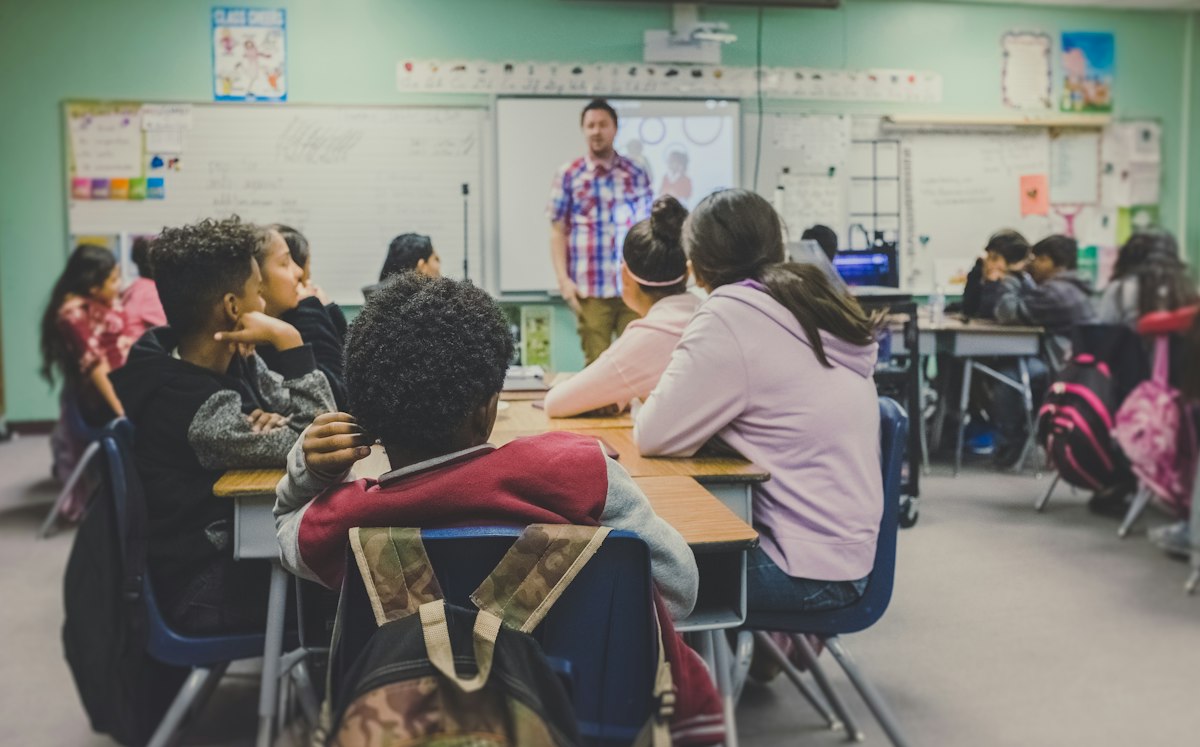
Critical thinking and collaboration are two of the core skills students need to develop throughout their education.
3. Communication & Collaboration
Here’s something funny: in a world full of digital communication tools — emails, Slack, video calls, shared docs — a lot of people still struggle to communicate clearly. Maybe because we’ve gotten used to shortcuts. Emojis instead of sentences. Bullet points instead of explanations.
But strong communication is one of the most important skills students need — in any field, at any level. Whether you’re pitching an idea, writing a report, leading a team, or just explaining something clearly to a client or colleague, your ability to communicate directly affects your results.
Communication skills students should develop:
- Clear written communication — emails, reports, proposals
- Confident verbal communication — presenting, speaking in meetings
- Active listening — actually absorbing what someone says, not just waiting for your turn
- Digital communication etiquette — knowing the right tone for emails vs. chat vs. video
- Persuasion and storytelling — structuring information to be compelling
Collaboration is just as critical
Almost every meaningful project in the real world is a team effort. Students who know how to work well with others — including people from different backgrounds, different time zones, and different perspectives — are genuinely rare and genuinely valuable.
The Partnership for 21st Century Learning identifies communication and collaboration as two of its “Four Cs” — core skills students need alongside critical thinking and creativity. It’s not an accident those four keep showing up together.
✦ ✦ ✦
4. Financial Literacy
This one doesn’t get enough attention in schools, and it really should. Thousands of students graduate every year without knowing how credit cards work, what compound interest means, how taxes are filed, or how to build a basic budget.
That’s not a small gap. It’s a life gap.
Financial literacy means understanding how money works — how to earn it, save it, spend it wisely, invest it, and avoid losing it to debt or bad decisions. It’s one of those skills students need that will literally affect every single decade of their life.
Core financial concepts every student should understand:
- Budgeting — tracking income and spending to live within your means
- Compound interest — how saving early builds wealth over time
- Credit scores — what they are, how they’re calculated, and why they matter
- Student loans & debt — understanding what you’re signing up for before you sign
- Investing basics — index funds, retirement accounts, and long-term thinking
- Taxes — how to file a basic return and understand deductions
Great free resources include Khan Academy’s Personal Finance courses and Investopedia, which explains financial concepts in plain English. Start here if you haven’t already.
A student who understands money at 18 is in a radically different position than one who figures it out at 35. The earlier you learn this stuff, the more options you have in life.
5. Emotional Intelligence & Mental Resilience
Let’s talk about something that doesn’t show up in most academic curriculums but absolutely should: emotional intelligence (EQ). It’s the ability to understand and manage your own emotions — and to recognize and respond to the emotions of others.
Studies consistently show that EQ is a stronger predictor of long-term success than IQ in many fields. And in 2026, with rising anxiety, burnout culture, and an overwhelming digital environment, mental resilience has become non-negotiable.
What emotional intelligence includes:
🧘
Self-Awareness
Knowing what you’re feeling and why — and understanding how your mood affects your actions.
🎯
Self-Regulation
Managing emotions productively — staying calm under pressure, not reacting impulsively.
❤️
Empathy
Understanding how others feel and responding with genuine care and consideration.
🤝
Social Skills
Building real relationships, navigating conflict, and working well with diverse people.
Mental resilience goes hand in hand with EQ. It’s your ability to bounce back from setbacks, handle rejection or failure, and keep going even when things get hard. This is a learned skill — not something you either have or don’t. Resources like Mindful.org offer practical, research-backed techniques students can use to build mental strength and emotional awareness.
In a world that throws a lot of uncertainty at young people — climate anxiety, economic shifts, rapidly changing tech — this might actually be the most important skill on this entire list.
6. Coding & Data Basics
You don’t have to become a software engineer. But having at least a basic understanding of how technology is built — and how to work with data — is increasingly becoming a baseline expectation in a huge range of careers.
Think about it: marketers analyze campaign data. Teachers use learning management platforms. Doctors use data-driven diagnostics. Designers code interactive prototypes. Even journalists need to interpret data to report on it accurately. Coding and data literacy are skills students need across almost every field now.
Taking better notes is one of the simplest ways to study smarter. See how AI note-taking tools are helping students capture and review information more effectively than ever.
Where to start:
- Python — beginner-friendly, widely used in data, AI, and automation
- HTML/CSS — understanding how websites are built is genuinely useful in many jobs
- Spreadsheet skills — Excel and Google Sheets data analysis
- Basic statistics — mean, median, correlation, probability — enough to read and interpret data
- Data visualization — tools like Tableau or even Google Data Studio
Free platforms like Codecademy and freeCodeCamp make it easy to learn at your own pace. Even spending 30 minutes a day for a few months can give you a solid foundation that opens real doors.
And here’s the thing — even if you never write a line of code professionally, understanding how technology works makes you better at using it, communicating with developers, and solving problems in a tech-driven workplace.

Learning to code and work with data is becoming one of the foundational skills students need for virtually any career path.
7. Creativity & Adaptability
Here’s the thing about creativity — it’s not just for artists. It’s for anyone who needs to solve a problem that doesn’t have an obvious answer. And in the modern workplace, that’s almost everyone, almost every day.
Creativity means thinking beyond the obvious solution. It means being willing to try something that hasn’t been tried before. It’s one of the few skills students need that AI genuinely cannot replicate — at least not in the way a human can, with context, feeling, and lived experience behind it.
How to nurture creativity as a student:
- Make things — write, build, design, cook, play music, draw — regularly
- Expose yourself to different fields and disciplines outside your major or interest area
- Practice brainstorming without judgment — quantity first, quality second
- Embrace boredom occasionally — your brain does some of its best creative work when it’s not being constantly stimulated
- Learn from people who think differently than you
Adaptability: the partner skill
Creativity is about generating new ideas. Adaptability is about adjusting when the plan changes — which it always does. Students who can pivot quickly, pick up new skills, and stay calm when things shift unexpectedly are going to thrive in a world that keeps reinventing itself.
Adaptability isn’t about being chaotic or lacking direction. It’s about being firmly grounded in your values and goals while staying flexible about how you get there. That’s a combination that’s incredibly hard to automate.
✦ ✦ ✦
8. Global Awareness & Cultural Sensitivity
In 2026, even small businesses operate globally. Remote teams often include people from five or six different countries. Products are made in one continent, marketed in another, and used worldwide. Cultural awareness isn’t a “nice-to-have” soft skill anymore — it’s a practical one.
Students who can navigate cultural differences with respect and curiosity — who understand different worldviews, communication styles, and social contexts — are better collaborators, better leaders, and better problem-solvers on a global stage.
What global awareness looks like in practice:
- Understanding basic world history and geopolitics — how countries relate to each other
- Learning another language — even basic proficiency shows effort and opens doors
- Being aware of your own cultural biases and assumptions
- Working respectfully and effectively with people from different backgrounds
- Staying informed about global events and their impact on industries and communities
Organizations like UNESCO’s Education for Sustainable Development program emphasize global citizenship as a core component of modern education. Students who develop this perspective are genuinely more competitive in international job markets.
9. Self-Management & Lifelong Learning
Here’s a skill that’s underrated and absolutely essential: the ability to manage yourself. Your time, your focus, your energy, your learning. Because the honest truth is — once you’re out of structured schooling, nobody is going to manage these things for you.
Self-management means setting your own goals, following through on them, organizing your time well, and knowing when to rest vs. when to push. It’s a skill that compounds over time — students who develop it early have a genuine head start.
The way you study matters just as much as how long you study. These proven study techniques for students can help you retain more in less time.
Key self-management habits:
- Time blocking — scheduling specific tasks to specific time windows
- Goal setting — using frameworks like SMART goals to set clear, achievable targets
- Managing distractions — especially digital ones (this is a legitimate skill in 2026)
- Reflection — regularly reviewing what’s working and what isn’t
- Rest and recovery — treating sleep and downtime as productive, not wasted
Lifelong learning: the meta-skill
Above everything else, perhaps the most valuable thing students can develop is a genuine love of learning. Not just for school — for life. The ability and desire to keep picking up new skills, staying curious, and growing throughout your career is what separates people who thrive in change from those who get left behind by it.
The OECD’s Education 2030 framework describes “learning agility” as a foundational capability for the future — the ability to learn new things quickly and apply them in new contexts. It’s not just about what you learn in school. It’s about how you approach learning for the rest of your life.
Every expert was once a beginner who decided to keep going. The students who succeed in 2026 and beyond won’t be the ones who knew the most on day one — they’ll be the ones who kept learning, kept adapting, and never stopped being curious.
10. How Students Can Start Building These Skills Today
Okay, so now you’ve got a list of the skills students need — but how do you actually start building them without feeling overwhelmed? Here’s the good news: you don’t have to tackle everything at once.
If managing your schedule feels overwhelming, an AI study planner can help you organize your time, set priorities, and stay on track automatically.
Start small, stay consistent, and stack habits over time. Here’s a practical approach:
Step 1: Pick 2–3 skills to focus on first
Look at the list above and ask yourself honestly: which of these am I weakest in? Which would have the biggest impact on my life or career right now? Start there. Don’t try to build all ten at once — that’s a recipe for burning out and quitting.
Step 2: Use free resources to get started
- Khan Academy — free courses on almost everything, including math, science, finance, and computing
- Coursera — university-level courses from top institutions, many auditable for free
- Codecademy — interactive coding lessons for beginners
- Elements of AI — free course on understanding artificial intelligence
- Duolingo — language learning, gamified and genuinely effective for basics
Step 3: Build habits, not just knowledge
Reading about critical thinking won’t make you a critical thinker. Practicing it will. For every skill on this list, there’s a way to actually do it — not just study it. Write things. Build things. Have conversations. Volunteer. Take on projects. Practice is where real skill development happens.
Step 4: Reflect and adjust regularly
Every month or so, check in with yourself. Are you actually making progress? Are these the right skills to prioritize right now? What’s changed? Self-directed learners who review and adjust their approach outperform those who just keep grinding in the same direction regardless of results.
Step 5: Find your community
Learning with other people is faster and more motivating than learning alone. Find clubs, online communities, study groups, or mentors who are working on similar things. The people around you shape who you become — choose that intentionally.
💡 The 1% Rule
You don’t need massive daily effort to build serious skills over time. Improving by just 1% each day leads to 37x growth over a year. Small, consistent actions are more powerful than occasional big pushes. Start with 20 minutes a day on one skill. Keep it sustainable. Build the habit first, then scale.
Wrapping It All Up
The skills students need in 2026 aren’t just about getting a job — they’re about building a life that’s adaptable, meaningful, and resilient in a world that keeps changing. AI literacy, critical thinking, communication, financial knowledge, emotional intelligence, coding basics, creativity, global awareness, and self-management — these aren’t separate items on a checklist. They work together.
You don’t need to master all of them overnight. Pick one. Start today. Be consistent. And remember — the fact that you’re reading a guide like this already puts you ahead. Most people wait for someone else to point them in the right direction. You’re already looking.
Now go build something worth building. 🌟
© 2026 Skills & Learning Guide · For educational purposes · Always verify information with official sources